Eyebrows play an important role in framing your face and enhancing your natural beauty. Well-shaped eyebrows can make your eyes look more defined, balance your facial features, and give your overall appearance a polished look. However, shaping your eyebrows for the first time can feel confusing, especially when you are unsure which shape suits your face or which method to use.
The good news is that you do not need to be a professional to achieve beautiful eyebrows. With a few basic tools, some patience, and the right techniques, you can learn how to shape your brows at home.
In this complete beginner-friendly eyebrow shaping guide, you will discover how to find your natural brow shape, choose the right shaping method, avoid common mistakes, and maintain neat, healthy-looking eyebrows.
What Is Eyebrow Shaping?
Eyebrow shaping is the process of removing unwanted brow hairs and defining the natural shape of your eyebrows. The goal is to create a clean, balanced appearance without removing too much hair or making your brows look unnatural.
Different eyebrow shapes can create different effects. For example, softly arched brows can add definition, while straighter brows may create a more relaxed appearance. The best eyebrow shape is usually one that complements your facial features and works with your natural hair growth.
For beginners, it is best to focus on enhancing your existing brows rather than trying to create a completely different shape.
Why Is Eyebrow Shaping Important?
Proper eyebrow shaping can make a noticeable difference in your overall appearance. Here are some of its main benefits:
- Frames your face: Well-groomed eyebrows help define your facial features.
- Enhances your eyes: A balanced brow shape can draw attention to your eyes.
- Creates a polished look: Neat eyebrows can make your everyday makeup look more complete.
- Improves symmetry: Careful shaping can help your eyebrows look more balanced.
- Supports your natural beauty: You can enhance your brows without relying on heavy makeup.
Remember that perfectly identical eyebrows are not necessary. Natural brows often have small differences, and these are completely normal.
Essential Tools for Eyebrow Shaping
Before you begin, gather a few basic eyebrow grooming tools. You do not need an expensive kit to get started.
1. Eyebrow tweezers
Tweezers are ideal for removing individual stray hairs with precision. They are especially useful for beginners because you can remove hairs gradually and maintain better control over your brow shape.
2. Spoolie brush
A spoolie is a small brush that helps you comb your eyebrow hairs into place. Brushing your brows upward makes it easier to see their natural shape and identify unwanted hairs.
3. Small eyebrow scissors
Eyebrow scissors can help trim unusually long hairs. Use them carefully and trim only when necessary to avoid creating gaps.
4. Eyebrow pencil
An eyebrow pencil can help you outline your desired shape before removing any hair. It is also useful for filling in sparse areas after shaping.
5. Good lighting and a mirror
Bright, even lighting helps you see fine hairs clearly. A regular mirror is generally sufficient, while a magnifying mirror can make it easier to spot individual hairs.
6. Gentle cleanser
Clean skin helps you begin with a fresh surface. Wash your face before shaping and make sure your hands and tools are clean.
How to Find Your Natural Eyebrow Shape
One of the most important steps in eyebrow shaping is understanding your natural brow structure. Instead of following every beauty trend, choose a shape that complements your features.
A simple way to map your eyebrows is to identify three points: the beginning, the arch, and the tail.
Step 1: Find the Beginning of Your Eyebrow
Hold an eyebrow pencil vertically beside the outer edge of your nose. The point where the pencil lines up with your brow area can serve as a general guide for where your eyebrow begins.
Avoid creating a gap that is too wide between your eyebrows, as this may make your brows appear disconnected.
Step 2: Identify the Arch
Look straight into a mirror and place the pencil diagonally from the outer edge of your nose, passing through the outer edge of your iris. This can provide a rough guide to where your natural arch may sit.
Your arch does not need to be dramatic. A soft, natural curve is often easier to maintain and works well for everyday grooming.
Step 3: Find the Eyebrow Tail
Angle the pencil from the outer edge of your nose toward the outer corner of your eye. This gives you a general reference for the end of your eyebrow.
Do not shorten your brows simply to match a guide. Your natural brow length, bone structure, and hair growth should also influence the final shape.
Step-by-Step Eyebrow Shaping for Beginners
Once you understand your natural brow shape, you can begin shaping your eyebrows at home. Take your time, especially if this is your first attempt.
Step 1: Clean Your Eyebrows
Wash your face with a gentle cleanser to remove oil, dirt, and makeup. Pat your skin dry before beginning.
Clean skin and clean tools help support good hygiene during eyebrow grooming.
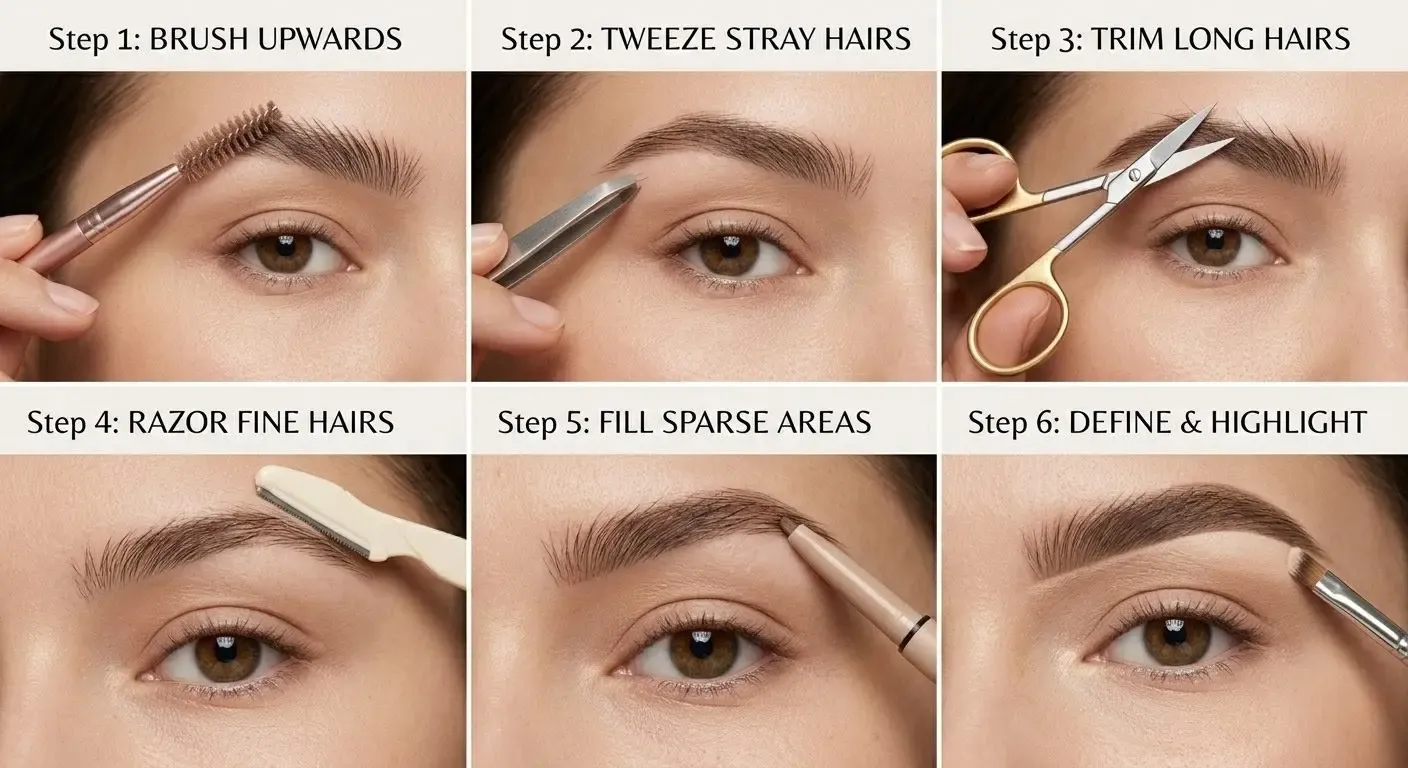
Step 2: Brush Your Brow Hairs
Use a spoolie to brush your eyebrows upward and outward. This reveals the natural direction of hair growth and helps you identify hairs that fall outside your desired shape.
Step 3: Outline Your Desired Shape
Use a light eyebrow pencil to mark the beginning, arch, and tail of each eyebrow. You can lightly outline the lower edge if it helps you see which hairs are outside your intended shape.
Keep the outline close to your natural brows. Beginners should avoid drawing an extremely thin or high arch before removing hair.
Step 4: Remove Stray Hairs With Tweezers
Use tweezers to remove a few hairs at a time, focusing mainly on obvious stray hairs beneath the brow and between the eyebrows.
Hold the skin gently taut and pull each hair in the direction of its growth. Work slowly and step back from the mirror occasionally to check your progress.
Avoid removing too many hairs from the top of your eyebrows, as this can change the natural arch and make the shape harder to maintain.
Step 5: Trim Long Hairs Carefully
Brush your brow hairs upward with a spoolie. If a few hairs extend noticeably beyond the natural outline, trim only their tips with small eyebrow scissors.
Do not cut straight across the entire eyebrow. Excessive trimming can create uneven patches and make the brows look sparse.
Step 6: Compare Both Eyebrows
Look at both eyebrows together in a regular mirror. Check whether their beginnings, arches, and tails look balanced.
Make small adjustments only where necessary. Remember that eyebrows are sisters, not twins, and forcing them to look perfectly identical can lead to overplucking.
Step 7: Soothe Your Skin
After shaping, gently clean the area and apply a fragrance-free moisturizer if your skin tolerates it. Avoid harsh exfoliants and irritating products on freshly groomed skin.
If you notice significant redness, swelling, or persistent irritation, stop grooming and allow the skin to recover.
Different Eyebrow Shapes and How to Choose One
There is no single eyebrow shape that suits everyone. Your natural brow structure and personal preferences matter more than following a trend.
1. Softly arched eyebrows
Softly arched brows feature a gentle curve that adds definition without looking too dramatic. They are a versatile option for people who prefer a natural, polished appearance.
2. Straight eyebrows
Straight brows have a relatively low arch and a more horizontal appearance. They can create a simple, understated look, particularly when the natural brow already follows this shape.
3. High-arched eyebrows
High-arched brows have a more noticeable peak. They create stronger definition, but removing too much hair to achieve this shape can make the brows look unnatural.
4. Rounded eyebrows
Rounded brows feature a smooth, curved outline rather than a sharp peak. They can be a good choice for people who prefer softer-looking brows.
5. Natural, full eyebrows
Full brows retain much of their natural thickness and structure. Minimal grooming and light filling can help maintain their shape without removing too much hair.
When choosing an eyebrow shape, consider your existing brow growth first. A shape that works beautifully on someone else may not suit your natural hair pattern.
Choosing the Right Eyebrow Shaping Method
Several methods can help you maintain your eyebrows. Each has different advantages, so the best option depends on your comfort level and experience.
Tweezing
Tweezing is one of the most beginner-friendly methods because it allows precise hair removal. It is suitable for cleaning up small areas and maintaining your natural shape.
However, repeated overplucking can damage follicles and may contribute to thinning over time. Remove only the hairs you genuinely want to eliminate.
Eyebrow Threading
Threading uses twisted thread to remove multiple hairs at once. It can create clean, defined lines and is commonly performed by trained beauty professionals.
If you are new to eyebrow shaping, a professional threading session can help establish a shape that you can maintain at home.
Waxing
Waxing removes several hairs at once and can provide a defined finish. However, it may irritate sensitive skin, and hot wax can cause burns if used incorrectly.
People using topical retinoids or certain acne treatments should seek professional advice before facial waxing because these products may increase skin fragility.
Eyebrow Trimming
Trimming is useful when your brow hairs are unusually long or extend beyond the desired outline. It does not remove hair from the root, so it is often used alongside tweezing.
For beginners, trimming should be minimal to avoid uneven results.
Common Eyebrow Shaping Mistakes to Avoid
Even small mistakes can change the appearance of your eyebrows. Keep these common problems in mind while grooming.
- Overplucking: Removing too many hairs can make brows look thin and uneven. Start with a few stray hairs and reassess before continuing.
- Creating an overly sharp arch: A dramatic arch may not match your natural growth pattern. Follow your existing brow structure.
- Making the eyebrows too short: Removing too much from the tail can affect facial balance. Check the natural length before trimming or tweezing.
- Trimming too much hair: Cutting brow hairs too short can create visible gaps. Trim only the tips of unusually long hairs.
- Following trends blindly: Extremely thin or sharply defined brows may not suit everyone. Choose a style that feels comfortable and natural.
- Using dirty tools: Unclean tweezers and scissors can introduce bacteria. Clean your tools according to the manufacturer’s instructions.
- Trying to achieve perfect symmetry: Small differences between eyebrows are normal. Aim for balance rather than identical shapes.
The most important beginner tip is simple: remove less hair than you think you need to. You can always remove a little more later.
How to Maintain Your Eyebrow Shape
Maintaining your eyebrows is easier when you follow a simple grooming routine.
Brush your brows with a spoolie each morning to keep the hairs in place. Remove occasional stray hairs when they become noticeable instead of reshaping the entire brow every time.
The frequency of grooming depends on how quickly your hair grows. Some people prefer to tidy their brows every week or two, while others need less frequent maintenance. There is no universal schedule.
If you accidentally overpluck your eyebrows, give them time to grow back before making further changes. Hair regrowth varies from person to person, and some follicles may take longer to recover.
You can also use a clear brow gel to keep your hairs in place or a brow pencil to fill in sparse areas. Apply makeup lightly to preserve a natural finish.
Frequently Asked Questions About Eyebrow Shaping
How should beginners shape their eyebrows?
Beginners should start by identifying their natural brow shape, brushing the hairs into place, and removing only obvious stray hairs. Tweezing is a useful option because it allows gradual, controlled hair removal.
Is it better to tweeze or thread eyebrows?
Both methods can work well. Tweezing is useful for small, precise adjustments at home, while threading can remove several hairs at once. Your choice depends on your experience, skin sensitivity, and preferred result.
How often should I shape my eyebrows?
It depends on your hair growth and personal preference. Many people tidy stray hairs every one to two weeks, but you may need more or less frequent grooming. Avoid unnecessary hair removal between sessions.
Can I shape my eyebrows at home?
Yes. With clean tools, good lighting, and a careful approach, you can maintain your eyebrows at home. If you want a major shape change or feel unsure about your natural arch, consider visiting a professional first.
What should I do if I overpluck my eyebrows?
Stop removing hair and allow your brows time to recover. Avoid repeatedly plucking the same area while waiting for regrowth. If hair loss is sudden, patchy, or persistent, consult a qualified healthcare professional to investigate possible causes.
Which eyebrow shape is best for beginners?
A natural shape that follows your existing brow growth is usually the easiest to maintain. A softly defined arch or a naturally straight brow can both work well, depending on your features.
Final Thoughts
Eyebrow shaping does not have to be complicated, even if you are a complete beginner. By understanding your natural brow shape, using the right tools, and removing unwanted hairs gradually, you can achieve neat, balanced eyebrows at home.
Start with small changes, avoid overplucking, and give yourself time to learn what works best for your face. Whether you prefer softly arched, straight, or full natural brows, the goal is to enhance your features rather than completely change them.
With a little patience and regular maintenance, you can develop an eyebrow shaping routine that is simple, comfortable, and easy to follow.