Finding the right foundation can feel overwhelming, especially if you are new to makeup. With so many shades, undertones, formulas, and finishes available, choosing the perfect one may seem confusing. The good news is that foundation matching does not have to be difficult. Once you understand your skin tone, undertone, and skin type, you can find a foundation that looks natural and feels comfortable throughout the day.In this beginner-friendly foundation matching guide, you will learn how to choose the right foundation shade, identify your undertone, select a formula for your skin type, and avoid common mistakes. Whether you prefer light everyday makeup or a full-coverage look, these simple tips will help you achieve a smooth, natural-looking finish.What Is Foundation Matching?Foundation matching is the process of choosing a makeup foundation that closely matches your natural skin color and undertone. The goal is to create an even complexion without making your face look too light, too dark, too orange, or too pink.A well-matched foundation blends seamlessly into your skin, making it difficult to notice where the makeup begins or ends. It should also work with your skin type and provide the finish you want, whether that is matte, dewy, or natural.Remember, the best foundation is not necessarily the most expensive one. It is the one that matches your skin and meets your personal makeup needs.Step 1: Understand Your Skin ToneYour skin tone refers to the color of your skin’s surface. It generally falls into several broad categories, although skin tones exist on a continuous spectrum.Common skin tone categories include:
- Fair: Very light skin that may burn easily in the sun.
- Light: Light skin with a little more color than fair skin.
- Light-medium: A shade between light and medium.
- Medium: Skin with a moderate amount of natural color.
- Tan: Skin that appears noticeably deeper or more golden.
- Deep: Rich brown to very deep skin tones.
These categories are only a starting point. Your exact shade may fall between two categories, and your skin color can change with sun exposure or throughout the year.When shopping for foundation, do not rely on shade names alone. Different makeup brands use different naming systems, so a medium shade in one brand may not match a medium shade in another.Step 2: Identify Your Skin UndertoneOne of the most important parts of foundation matching is understanding your undertone. Your skin tone can change, but your undertone is generally more consistent.There are three main undertone categories.Warm UndertoneWarm undertones usually have golden, yellow, or peachy qualities. If your skin tends to look more golden than pink, you may have a warm undertone.Foundations labeled warm, golden, yellow, or sometimes peach may be suitable starting points.Cool UndertoneCool undertones often have pink, rosy, or bluish qualities. If your skin looks naturally rosy, you may have a cool undertone.Look for foundations labeled cool, rosy, or pink, while checking how the actual shade looks on your skin.Neutral UndertoneNeutral undertones have a balance of warm and cool qualities. Your skin may not appear strongly golden, yellow, pink, or rosy.Neutral foundations can be a useful starting point, although some people need a slightly warmer or cooler shade for the best match.What About Olive Undertones?Some people have olive undertones, which may appear greenish, muted, or slightly golden. Olive skin can be light, medium, or deep.If foundations repeatedly look too orange, pink, or yellow on your skin, an olive-toned formula may be worth trying.Step 3: How to Determine Your UndertoneYou do not need professional makeup tools to begin identifying your undertone. Try these simple methods, but remember that no single test is completely reliable.
Check your veins: Look at the veins on your wrist in natural light. Green-looking veins may suggest a warm undertone, blue or purple veins may suggest a cool undertone, and a mixture may suggest neutral undertones. However, lighting and skin depth can affect how your veins appear.
Notice your jewelry preferences: If gold jewelry seems especially flattering, you might lean warm. If silver looks particularly harmonious, you might lean cool. If both look equally good, you may be neutral. This is a helpful clue, not a definitive test.
Observe your natural skin color: Look at your face and neck in indirect daylight without makeup. Notice whether your skin appears more golden, rosy, or balanced.
Compare foundation swatches: This is often the most practical method. Test a few shades with different undertones and see which one blends most naturally into your skin.For the most reliable result, use several clues together rather than depending on just one.Step 4: Test Foundation the Right WayChoosing a foundation based on a bottle label or an online swatch can be misleading. The best way to find your shade is to test it directly on your skin whenever possible.Follow these steps:
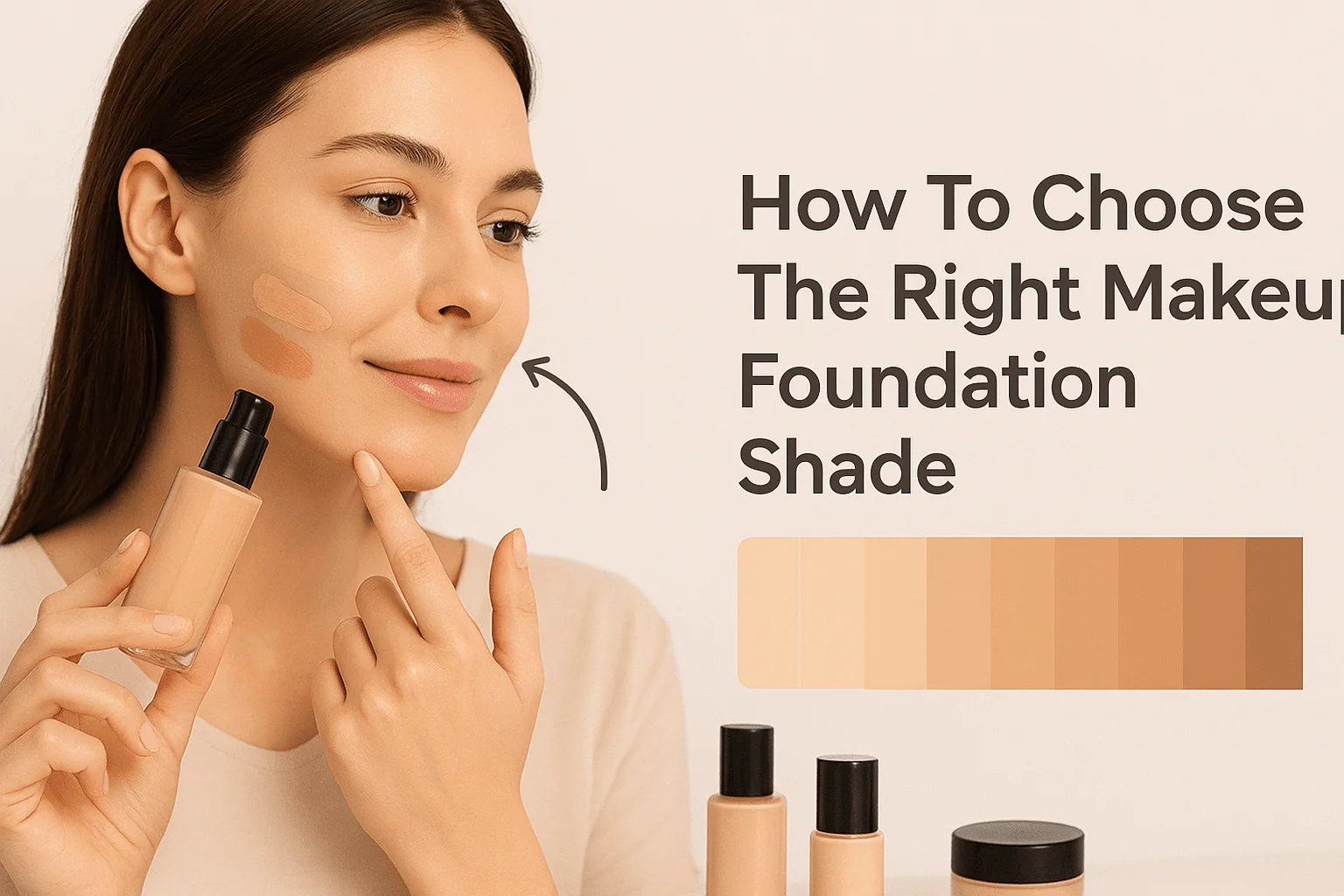
- Start with clean, moisturized skin.
- Choose three shades that look close to your complexion.
- Apply a small stripe of each shade along your jawline.
- Blend each stripe gently into the skin.
- Check the shades in natural daylight.
- Wait a few minutes to see whether the color changes as the formula settles.
- Choose the shade that blends most naturally with both your face and neck.
Avoid testing foundation only on your hand. The skin on your hands can have a different color from your face, making it harder to find an accurate match.If you are shopping online, compare official brand swatches, look at people with similar skin tones, and check the retailer’s return policy before purchasing.Step 5: Choose a Foundation for Your Skin TypeA foundation may have the right color but still look uneven if the formula does not suit your skin type.For Oily SkinIf your skin becomes shiny throughout the day, consider oil-free, soft-matte, or long-wearing foundations. Lightweight formulas can help you achieve coverage without making your makeup feel heavy.You can also use a small amount of setting powder on areas that become oily.For Dry SkinDry skin often benefits from hydrating or moisturizing foundations with a natural or radiant finish. Preparing your skin with moisturizer can help foundation apply more smoothly.Avoid applying too much powder, as it may emphasize dry patches.For Combination SkinCombination skin may be oily in some areas and dry in others. A natural-finish foundation can be a good starting point.You can apply a little powder to your T-zone while leaving the cheeks with a more natural finish.For Sensitive SkinIf your skin is easily irritated, consider fragrance-free formulas and check the ingredient list for substances you already know cause reactions. Patch-test new products before applying them over your entire face.Step 6: Understand Foundation Coverage and FinishFoundation matching is not only about color. Coverage and finish also influence how your makeup looks.
Light coverage: This provides a sheer, skin-like appearance and allows more of your natural complexion to show through.
Medium coverage: This helps even out skin tone while maintaining a natural appearance.
Full coverage: This provides more coverage for visible discoloration or when you prefer a more polished makeup look.Foundation finishes also make a difference:
- Matte: Creates a shine-reduced finish and may suit people who prefer less visible oiliness.
- Natural: Gives the skin a balanced appearance without looking extremely matte or glossy.
- Dewy: Creates a radiant, fresh-looking finish.
- Satin: Falls between matte and dewy, offering a subtle glow.
Choose coverage and finish based on your preferences rather than assuming you need full coverage to achieve beautiful-looking skin.Step 7: How to Match Foundation When Shopping OnlineBuying foundation online can be challenging because screens, lighting, and product photography may change how a shade appears.Here are a few ways to improve your chances of choosing correctly:
- Check the brand’s official shade descriptions and undertone labels.
- Compare swatches photographed in natural light.
- Look for reviews from people with similar skin tones and undertones.
- Use a shade-matching tool if the brand offers one.
- Compare your existing foundation shade, provided it is a good match.
- Check whether the store allows returns or exchanges for opened makeup.
Do not assume that two foundations with the same shade name will look identical. Formulas can differ in depth, undertone, and how they appear after application.If possible, visit a store to test the shade before ordering a full-size product.Common Foundation Matching Mistakes to AvoidEven experienced makeup users sometimes struggle with foundation matching. Avoiding a few common mistakes can make the process easier.
Choosing a shade that is too light: A foundation that is too pale may create a noticeable contrast between your face and neck.
Choosing a shade that is too dark: A darker foundation does not automatically make your complexion look warmer or more natural. Choose a matching shade and use bronzer separately if desired.
Ignoring undertones: A foundation may be the right depth but still look orange, pink, or ashy because its undertone does not suit your complexion.
Testing under artificial lighting: Store lighting can distort how foundation looks. Always check the shade in natural daylight when possible.
Skipping skin preparation: Dry patches, excess oil, or poorly absorbed skincare products can affect how foundation sits on the skin.
Buying without testing: A shade that looks perfect in a photograph may look different in person.What to Do If Your Foundation Does Not MatchIf your foundation looks slightly wrong after application, first identify the problem.
- If it looks too orange, try a less warm or more neutral shade.
- If it looks too pink, consider a warmer or more neutral option.
- If it looks too yellow, compare neutral or cooler shades.
- If it looks too light or too dark, adjust the shade depth rather than changing undertone alone.
- If it looks ashy, especially on deeper skin, consider whether the shade is too light or has an unsuitable undertone.
Sometimes, mixing two compatible foundation shades can help you achieve a closer match. Use products with compatible formulas and test the mixture before applying it to your entire face.Also, remember that foundation can sometimes oxidize, meaning its color may appear darker or more orange after application. If this happens, allow the product to settle before deciding whether you need a different shade.Frequently Asked Questions About Foundation MatchingHow do I find my perfect foundation shade?Start by identifying your skin tone and undertone. Test several nearby shades along your jawline in natural light, then choose the one that blends seamlessly with your face and neck.Should foundation match my face or neck?Ideally, your foundation should blend naturally between your face and neck. Testing along the jawline helps you compare both areas and avoid a visible color difference.How can I match foundation without knowing my undertone?Test shades with warm, cool, and neutral undertones. The shade that blends most naturally into your skin is often a better guide than a wrist-vein test alone.Can I use the same foundation shade all year?You may need a slightly different shade during different seasons because sun exposure can change your skin color. Keeping two complementary shades can make seasonal adjustments easier.Why does my foundation look different after a few hours?The formula may oxidize, mix with natural skin oils, or change in appearance as it wears. Skin preparation, application technique, and the foundation formula can all influence the final result.Is expensive foundation better than affordable foundation?Not necessarily. Both affordable and high-end foundations can provide excellent results. The most important factors are shade accuracy, formula suitability, comfort, and the finish you prefer.Final ThoughtsFinding the right foundation becomes much easier when you understand your skin tone, undertone, and skin type. Instead of choosing a shade based only on its name or packaging, take time to test it along your jawline and check the result in natural light.Remember that the perfect foundation should blend naturally with your complexion, feel comfortable on your skin, and provide the coverage you want. You may need to try a few shades before finding the right one, and that is completely normal.With a little patience and the right foundation matching techniques, even beginners can build confidence and create a smooth, natural-looking makeup base.