You don’t need an expensive gym membership or fancy fitness equipment to get stronger. With a little space, a consistent routine, and the right exercises, you can build strength right from the comfort of your home.
Home strength training has become a popular choice for people who want to improve their fitness without spending time traveling to the gym. Whether you’re a complete beginner or someone looking to get back into exercise, working out at home can be a simple and convenient way to develop healthy habits.
The best part is that many effective strength exercises use your own body weight as resistance. As you become stronger, you can introduce dumbbells or resistance bands to make your workouts more challenging.
In this home strength training guide, we’ll cover everything you need to know, including beginner-friendly exercises, essential equipment, workout routines, and practical tips to help you get started.
1. What Is Home Strength Training?
Home strength training is a form of exercise that uses resistance to strengthen your muscles without requiring a traditional gym environment.
You can perform these workouts using bodyweight exercises, resistance bands, dumbbells, or other simple equipment.
Common examples include squats, push-ups, lunges, planks, and glute bridges. These exercises target different muscle groups and help improve your overall physical strength.
Home strength training is suitable for different fitness levels because you can adjust the exercises according to your ability.
For beginners, starting with simple bodyweight movements is often enough to build a strong foundation.
2. Understand the Benefits of Strength Training at Home
Regular strength training offers several benefits that go beyond building muscle.
Here are some reasons to include it in your fitness routine:
- Builds muscle strength: Resistance exercises help your muscles become stronger over time.
- Supports bone health: Strength training can help maintain bone strength.
- Improves balance and stability: Exercises that target your legs and core can support better movement control.
- Supports healthy weight management: Building and maintaining muscle contributes to overall physical fitness.
- Makes everyday activities easier: Improved strength can help with lifting, carrying, bending, and climbing stairs.
- Saves time and money: You can exercise at home without paying for a gym membership or commuting.
Another advantage is flexibility. You can choose a workout time that fits your daily schedule.
3. Prepare a Simple Home Workout Space
You don’t need a large room to create an effective home workout area.
Choose a clean, comfortable space where you can move freely without hitting furniture or other objects.
Before starting, make sure you have enough room to perform exercises such as squats, lunges, and planks.
Here are a few useful items you may want to keep nearby:
- An exercise mat for floor exercises.
- Comfortable workout clothing.
- A water bottle.
- A pair of light dumbbells.
- Resistance bands.
- A sturdy chair for supported exercises.
These items are helpful but not essential. You can begin with bodyweight exercises and gradually purchase equipment as your fitness needs change.
4. Start With Basic Bodyweight Exercises
Bodyweight exercises are an excellent starting point for beginners because they allow you to build strength without lifting external weights.
Here are some simple exercises to include in your home strength training routine.
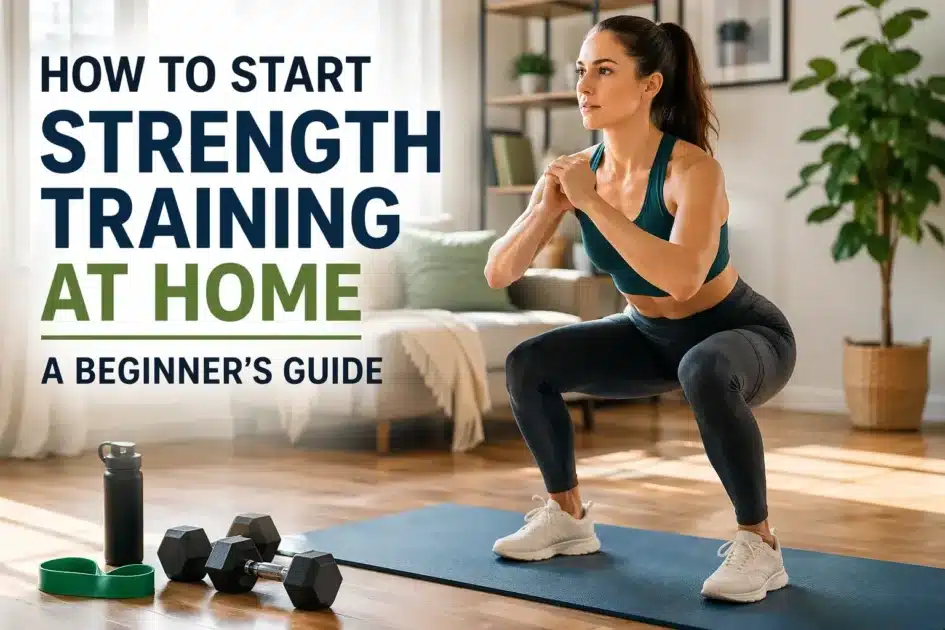
Squats: Stand with your feet approximately shoulder-width apart. Bend your knees and lower your hips as if sitting on a chair. Return to standing. Squats work your thighs and glutes.
Wall push-ups: Stand facing a wall, place your hands against it, and slowly bend your elbows to bring your chest closer to the wall. Push back to the starting position. This is a beginner-friendly way to strengthen your chest, shoulders, and arms.
Reverse lunges: Step one foot backward and lower your body comfortably. Push through your front foot to return to standing. Repeat on the other side.
Glute bridges: Lie on your back with your knees bent. Lift your hips while gently squeezing your glutes, then lower slowly.
Planks: Place your forearms on the floor and extend your legs behind you. Keep your body aligned and hold the position for a comfortable amount of time.
Start with easier variations and focus on proper technique before increasing repetitions.
5. Follow a Beginner-Friendly Home Strength Training Routine
A simple workout plan can make it easier to stay consistent.
Here is an example of a beginner-friendly full-body routine you can try at home.
| Exercise | Sets | Repetitions |
|---|---|---|
| Bodyweight squats | 2 | 10–12 |
| Wall push-ups | 2 | 8–10 |
| Reverse lunges | 2 | 8 per leg |
| Glute bridges | 2 | 12 |
| Plank | 2 | 15–20 seconds |
Rest between sets and adjust the repetitions according to your fitness level.
You can begin with two workouts per week and gradually increase to three sessions as your body becomes comfortable with the routine.
Remember, the goal is to build a habit rather than complete the most difficult workout possible.
6. Learn Proper Exercise Technique
Good exercise technique is essential for getting the most out of your home workouts.
Before increasing repetitions or adding weights, make sure you understand how to perform each movement correctly.
Keep these tips in mind:
- Move slowly and avoid rushing through exercises.
- Maintain a comfortable range of motion.
- Keep your body properly aligned.
- Avoid holding your breath during difficult movements.
- Stop if you experience sharp or unusual pain.
- Choose easier exercise variations when necessary.
If you’re unsure about an exercise, consider getting guidance from a qualified fitness professional.
7. Gradually Increase Your Workout Difficulty
As your body becomes stronger, your initial workout may start feeling easier.
This is a good opportunity to gradually increase the challenge.
You can do this by adding a few repetitions, performing another set, slowing down your movements, or using resistance bands and dumbbells.
For example, if you can comfortably complete two sets of 10 squats, you might increase the repetitions to 12 before adding resistance.
This approach is called progressive overload. It helps your muscles adapt to gradually increasing demands.
Avoid making sudden increases in workout intensity. Small, consistent changes are easier to manage.
8. Create a Weekly Home Workout Schedule
A balanced schedule helps you stay active while giving your muscles enough time to recover.
Here’s an example for beginners:
| Day | Activity |
|---|---|
| Monday | Full-body strength training |
| Tuesday | Light walking |
| Wednesday | Rest or gentle stretching |
| Thursday | Full-body strength training |
| Friday | Light cardio |
| Saturday | Optional strength or mobility session |
| Sunday | Rest |
You don’t need to follow this exact schedule. Adjust it according to your fitness level, availability, and recovery needs.
Two or three strength-training sessions per week are a reasonable starting point for many beginners.
9. Support Your Workouts With Proper Nutrition
Exercise is only one part of improving your strength. Your body also needs balanced nutrition to support muscle maintenance and recovery.
Include protein-rich foods such as eggs, fish, chicken, beans, lentils, yogurt, and other foods that fit your dietary preferences.
Eat a variety of fruits, vegetables, and whole grains to provide essential nutrients and energy.
Drink enough water throughout the day, particularly when exercising.
You don’t need expensive supplements to begin strength training. Focus on a balanced diet that meets your individual nutritional needs.
10. Stay Consistent and Give Your Body Time to Recover
One of the biggest challenges of home workouts is staying motivated.
Unlike a gym, your home environment may include plenty of distractions. Creating a regular workout time can help you build consistency.
Track your exercises, repetitions, and progress in a notebook or fitness app.
Celebrate small achievements, such as completing your first full workout or performing more repetitions than before.
Also, remember that rest is essential. Allow your muscles time to recover between challenging sessions, get enough sleep, and avoid training through pain.
If you have an existing medical condition or injury, seek appropriate professional advice before beginning a new exercise program.
Final Thoughts
Home strength training is a simple and effective way to improve fitness, build muscle strength, and develop healthier habits without needing an expensive gym membership.
Start with basic bodyweight exercises, create a realistic workout schedule, and gradually increase the difficulty as your fitness improves.
You don’t need to make dramatic changes overnight. Consistency, proper technique, balanced nutrition, and enough recovery are what make a long-term difference.
Start small, stay patient, and enjoy building a stronger and healthier lifestyle right at home.