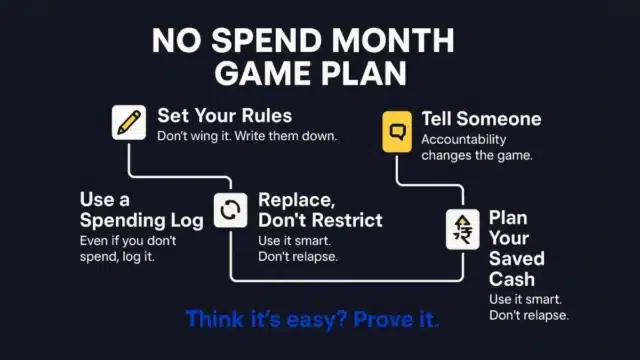
Saving money isn’t always easy, especially when everyday expenses and tempting online deals make it difficult to stick to a budget. Sometimes, even when you promise yourself that you’ll spend less, small purchases slowly add up. Before you know it, your monthly budget is gone.
That’s where a no spend month can help.
A no spend month is a simple money-saving challenge that encourages you to stop buying unnecessary things for 30 days. Instead of spending on shopping, dining out, or random purchases, you focus on essential expenses and make better use of what you already have.
Whether you’re trying to grow your savings, pay off debt, or simply become more mindful of your spending habits, this challenge can be a great place to start.
If you’re wondering how to plan a no spend month without feeling overwhelmed, here’s a practical step-by-step guide to help you get started.
1. Understand Your Reason for Starting
Before beginning your no spend challenge, think about why you want to do it. Having a clear reason makes it easier to stay motivated, especially when you’re tempted to spend money.
Perhaps you want to build an emergency fund, save for a vacation, reduce unnecessary expenses, or get better control of your finances.
Whatever your reason, write it down somewhere you can see it every day. You can even set a specific savings goal.
For example, if you usually spend $200 a month on unnecessary shopping and entertainment, you could aim to save most of that money during your challenge.
Your goal doesn’t have to be huge. What matters is creating a positive financial habit that you can maintain.
2. Set Your No Spend Month Rules
Every successful no spend month needs a few clear rules. Without them, it’s easy to make excuses for unnecessary purchases.
Start by separating your expenses into two categories: essential and non-essential.
Expenses you can continue paying:
- Rent or mortgage payments.
- Electricity, water, and internet bills.
- Groceries and basic household supplies.
- Transportation expenses.
- Medical bills and necessary medication.
- Other unavoidable family expenses.
Expenses to avoid during the challenge:
- Buying new clothes and shoes.
- Ordering takeaway or eating at restaurants.
- Unnecessary beauty and skincare products.
- Impulse shopping and online purchases.
- Expensive entertainment activities.
- Home decorations and accessories you don’t need.
Remember, a no spend month isn’t about refusing to spend money on important things. It’s about cutting back on purchases that aren’t necessary.
3. Review Your Current Spending Habits
Before starting your challenge, take a close look at where your money goes.
Check your recent bank statements, digital payment history, or budgeting records. Pay attention to small purchases because they can quietly consume a significant part of your income.
For example, buying coffee every morning, ordering food several times a week, or purchasing discounted products online might seem harmless individually. However, these expenses can add up over time.
Write down your regular expenses and identify areas where you can reduce spending.
This simple exercise will help you understand your financial habits and make your no spend month more effective.
4. Create a Realistic Monthly Budget
Once you understand your spending habits, prepare a realistic budget for the month.
Start with your monthly income and subtract all necessary expenses. These include housing, groceries, utilities, transportation, and other essential payments.
Next, decide how much money you want to save during the challenge.
You don’t need complicated budgeting software. A simple notebook, spreadsheet, or budgeting app can help you organize everything.
Make sure your budget includes some flexibility for unexpected essential expenses. Life doesn’t always go according to plan, and your financial challenge should be realistic enough to handle that.
5. Plan Your Meals Before Grocery Shopping
Food is one of the easiest areas where unnecessary spending can happen.
When you don’t know what to cook, ordering takeaway or visiting a restaurant can feel like the easiest option. Unfortunately, doing this regularly can make it difficult to stay within your budget.
To avoid this, plan your meals for the week.
Check your refrigerator, freezer, and pantry before purchasing groceries. Use ingredients you already have and create a shopping list based on what you genuinely need.
Try preparing meals at home, cooking larger portions, and using leftovers creatively.
Meal planning not only reduces food expenses but also helps prevent food waste.
6. Find Free Activities Instead of Spending Money
One common misconception about a no spend month is that you have to stop enjoying life.
That’s not true!
You can still have fun without spending money. You simply need to become a little more creative with your free time.
Here are some activities worth trying:
- Read books you already own.
- Go for a walk in a nearby park.
- Organize a movie night at home.
- Try free online fitness classes.
- Spend quality time with family and friends.
- Explore free educational courses.
- Start a new hobby using things you already have.
You may discover that some of your favorite activities don’t cost anything at all.
7. Avoid Shopping Temptations
Staying away from unnecessary spending becomes much easier when you remove common temptations.
Start by unsubscribing from promotional emails and turning off shopping app notifications. These reminders often encourage you to purchase things you weren’t planning to buy.
Avoid browsing online stores when you’re bored, and consider deleting shopping apps temporarily if necessary.
Another useful trick is to create a 30-day wish list. Whenever you feel like buying something unnecessary, write it down instead of purchasing it immediately.
After your no spend month ends, review the list. You may realize that many of those purchases weren’t important in the first place.
8. Track Your Progress Every Week
Tracking your progress can help you stay motivated throughout the challenge.
At the end of each week, review your spending and calculate how much money you’ve managed to save.
You can use a simple tracker to record:
- Your daily spending.
- Money saved from avoided purchases.
- Essential expenses.
- Spending habits you want to improve.
- Your progress toward your savings goal.
Don’t worry if you make an unnecessary purchase once or twice. One mistake doesn’t mean your entire challenge has failed.
Instead of giving up, understand what caused the purchase and make a plan to avoid repeating it.
Progress is more important than perfection.
9. Review Your Results at the End of the Month
Congratulations! You’ve reached the end of your no spend month.
Now it’s time to see what you’ve achieved.
Compare your spending before and during the challenge. Calculate how much you saved and consider moving that money into a savings account or using it toward an important financial goal.
Also, reflect on the habits you’ve developed.
Maybe you’ve become more comfortable cooking at home, stopped buying things impulsively, or learned to enjoy free activities.
These small changes can make a meaningful difference to your finances over time.
Final Thoughts
A no spend month is more than just a short-term money-saving challenge. It’s an opportunity to understand your spending habits, reduce unnecessary expenses, and build a healthier relationship with money.
The secret to success is simple: set realistic rules, plan your essential expenses, avoid unnecessary shopping, and track your progress.
You don’t have to be perfect throughout the entire month. Even small improvements can help you become more financially responsible.
Start with one month, learn from the experience, and keep the habits that work best for your lifestyle. Your future savings goals will thank you!