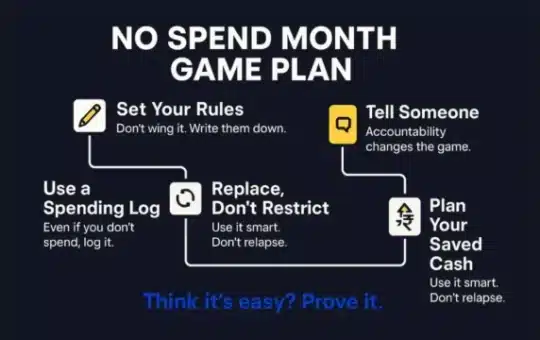
Have you ever reached the end of the month and wondered where all your money went? Between grocery shopping, online purchases, restaurant meals, subscriptions, and everyday expenses, it’s easy to spend more than you realize. If you’re looking for a simple way to take control of your finances, planning a no-spend month could be exactly what you need.
A no-spend month is a personal money challenge where you temporarily stop spending on unnecessary items while continuing to pay for essential expenses. It doesn’t mean you have to give up everything you enjoy or live an uncomfortable lifestyle. Instead, it’s about becoming more intentional with your money and breaking spending habits that aren’t helping your financial goals.
Whether you want to build an emergency fund, pay off debt, or save for a major purchase, these practical no-spend month tips can help you get started.
1. Set a Clear Goal Before You Begin
The first step in planning a successful no-spend month is deciding why you’re doing it.
Having a specific financial goal gives you something to work toward and helps you stay motivated when you’re tempted to spend.
For example, you might want to:
- Save money for an emergency fund.
- Pay down credit card debt.
- Build your vacation savings.
- Prepare for a large purchase.
- Reduce unnecessary shopping habits.
- Improve your monthly budget.
Choose one main goal and decide how much money you’d like to save.
For instance, if you usually spend $200 monthly on entertainment and unnecessary purchases, your goal could be to save most of that money during your challenge.
A clear target makes the experience more rewarding and easier to measure.
2. Decide What You Can and Cannot Buy
A no-spend month works best when you establish clear rules before starting.
The idea isn’t to stop spending money completely. You still need to pay for essential expenses such as rent, utilities, groceries, transportation, medication, and necessary household supplies.
However, you can temporarily avoid non-essential purchases.
Essential expenses may include:
- Housing and utility bills.
- Basic groceries.
- Transportation to work.
- Healthcare and necessary medication.
- Required insurance payments.
- Essential household products.
Non-essential expenses may include:
- New clothes and accessories.
- Restaurant meals and takeaway.
- Unnecessary online shopping.
- Expensive entertainment.
- Unplanned home decorations.
- Unused subscriptions and memberships.
Write down your personal spending rules and keep them somewhere visible.
This prevents confusion and helps you stay consistent throughout the month.
3. Review Your Budget and Spending Habits
Before your challenge begins, take a close look at your current spending habits.
Review your bank statements, payment history, and recent purchases. Identify the areas where you spend the most money unnecessarily.
You might discover that small expenses, such as daily coffee purchases, food delivery, or frequent online orders, add up to a surprisingly large amount.
Create a simple monthly budget that separates essential expenses from optional spending.
Knowing where your money goes makes it easier to identify opportunities to save.
It also gives you a useful starting point for comparing your financial progress after the challenge.
4. Plan Your Meals and Use What You Already Have
Food expenses can quickly increase when you regularly eat outside or order takeaway.
One effective way to reduce spending during a no-spend month is to plan your meals in advance.
Start by checking your refrigerator, freezer, and pantry. Look for ingredients you already own and create meals around them.
For example, leftover vegetables can become soup, extra rice can be used for fried rice, and pantry staples can help you prepare affordable meals.
Create a weekly meal plan and make a grocery list before shopping.
You don’t need to avoid buying groceries altogether. Simply focus on purchasing essential ingredients instead of unnecessary snacks, expensive convenience foods, and products you already have.
5. Unsubscribe From Shopping Emails and Notifications
Online shopping notifications can make it difficult to control spending.
Special offers, flash sales, limited-time discounts, and promotional emails often encourage people to buy products they never planned to purchase.
During your no-spend month, reduce these distractions.
Unsubscribe from promotional emails, turn off shopping app notifications, and avoid browsing online stores without a specific reason.
You can also remove saved payment information from shopping websites to make impulse purchases less convenient.
Creating a little distance between yourself and shopping advertisements can help you focus on your savings goal.
6. Find Free Ways to Enjoy Your Time
One common reason people struggle with a no-spend challenge is the fear of missing out on entertainment.
However, having fun doesn’t always require spending money.
There are plenty of free activities you can enjoy throughout the month.
Consider:
- Walking or exercising outdoors.
- Reading books you already own.
- Watching movies using existing subscriptions.
- Organizing your home.
- Trying new recipes.
- Visiting free community events.
- Spending quality time with family and friends.
- Learning a new skill through free online resources.
You can also create a list of activities you enjoy that don’t require additional spending.
This makes it easier to avoid expensive entertainment while keeping your month enjoyable.
7. Use What You Already Own
A no-spend month is an excellent opportunity to appreciate the things you already have.
Instead of buying new clothes, organize your wardrobe and create different outfits using existing pieces.
Before purchasing household products, check your storage areas for items you may have forgotten about.
You can also use books, stationery, kitchen equipment, and other belongings that are sitting unused.
Try a simple rule: Before buying something, check whether you already own something that can serve the same purpose.
This habit can help reduce unnecessary purchases even after your challenge ends.
8. Avoid Impulse Purchases With a Waiting Rule
Impulse buying is one of the biggest obstacles to successful saving.
Sometimes, you see something attractive and immediately feel the need to purchase it. However, that excitement often disappears after a little time.
During your no-spend month, introduce a waiting rule.
Whenever you feel tempted to buy something unnecessary, write it down instead of purchasing it immediately.
Wait at least 24 to 48 hours before reconsidering the item.
For the duration of your challenge, you can simply add non-essential purchases to a wish list and review them after the month ends.
You may discover that many things you wanted to buy aren’t actually important.
9. Track Your Savings Throughout the Month
Tracking your progress helps you stay motivated and understand how much money you’re saving.
Create a simple spreadsheet or use a budgeting app to record expenses you avoided.
For example, if you normally spend $40 on takeaway each week and avoid it during the challenge, you could save approximately $160 over four weeks.
You can also track your progress using a calendar.
Mark each successful no-spend day and celebrate small milestones along the way.
Seeing your progress makes the challenge feel more achievable and encourages you to continue.
10. Make a Plan for Life After the Challenge
The purpose of a no-spend month isn’t just to save money temporarily. It’s also an opportunity to build healthier financial habits.
Before the month ends, review your spending and calculate how much you saved.
Think about which habits were easiest to change and which expenses you genuinely missed.
You don’t need to continue every restriction forever. Instead, keep the habits that helped you manage your money better.
For example, you might decide to continue meal planning, limit online shopping, or set a monthly entertainment budget.
Transfer your saved money into a dedicated savings account or use it toward your financial goal.
Turning temporary savings into long-term financial progress is what makes the challenge worthwhile.
Final Thoughts
Planning a no-spend month doesn’t have to be complicated or stressful. With clear rules, a realistic budget, and a little preparation, you can reduce unnecessary expenses and develop better money habits.
Start by setting a financial goal, identifying essential expenses, planning affordable meals, and finding free ways to enjoy your time. Most importantly, track your progress and avoid being too hard on yourself if you make a mistake.
Remember, the goal isn’t to stop enjoying life. It’s to understand your spending habits and make better financial decisions.
A successful no-spend month isn’t about spending absolutely nothing. It’s about spending intentionally, saving more, and taking control of your financial future.